
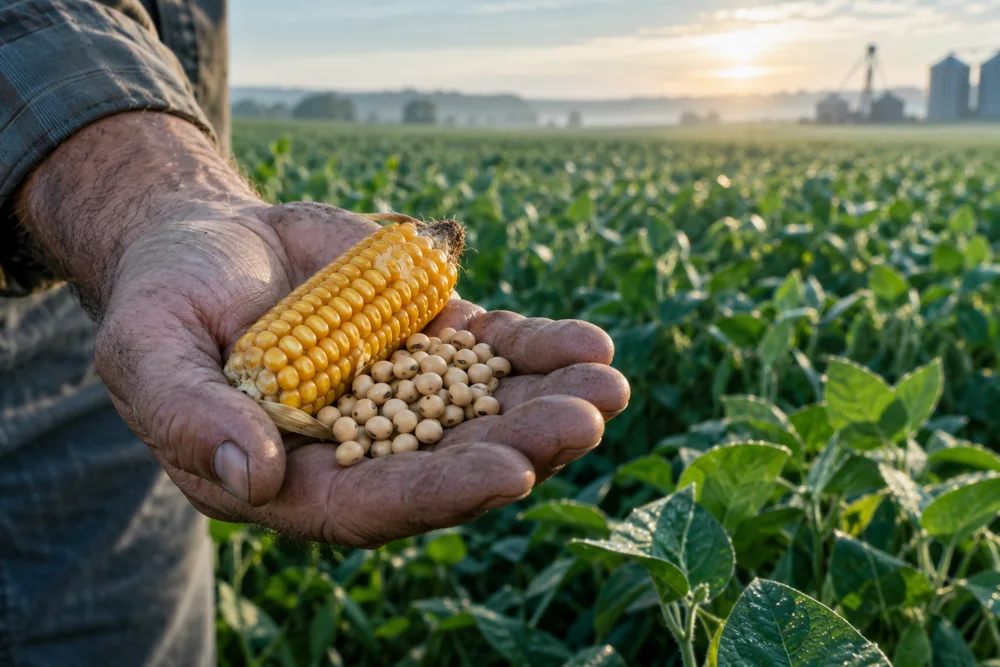
GMO is an abbreviation formed from the initials of the English phrase Genetically Modified Organisms.
The term genetically modified organism refers to a plant, animal, microorganism or other organism whose genetic structure has been modified in a laboratory environment using genetic engineering science and technologies. These organisms are a combination of plant, animal, bacterial and viral genes that do not occur in nature under natural conditions.
Genetic modification affects many of the products people consume daily. Today, the number of GMOs for commercial use increases every day. For this reason, new standards are being designed under the project known as NON-GMO in order to verify that the genetics of products have not been modified.
Three Different Risk Levels Have Been Defined to Determine Whether a Product Is NON-GMO:
- High risk level: Here, products are produced through a process involving organisms known to be genetically modified and commercially available. For example, alfalfa, canola, corn, cotton, soy, sugar beet, squash, animal products, microbes and enzymes, and potatoes are high-risk products. • Low risk level: Here, products are not produced through a process involving organisms known to be genetically modified and commercially available. For example, lentils, spinach, tomatoes, sesame and avocado are low-risk products. • No-risk level: Here, products are not derived from biological organisms and therefore no genetic modification is involved. • Monitored risk level: Here, the development of new genetically modified products is monitored by the NON-GMO project. Currently, around 100 products are being tracked. The main products that would be affected by GMO contamination are: flax, rice, wheat, apples, mushrooms, oranges, pineapple, salmon, sugar cane and tomatoes.
What Benefits Does a NON-GMO Certificate Provide to Businesses?
The NON-GMO label, indicating that a product has not been genetically modified, is an important label, because growing food and offering it to consumers this way has significant environmental and sustainability advantages. Today, a company's claim that its products are GMO-free does not always mean that it has been verified by a third party. If a third party has verified and approved this, information to that effect should be sought on the label to be sure.
For example, an "organic" label on products inspires consumer confidence and proves that certain certification programs have been applied. For this reason, labels on products such as those approved under the NON-GMO project, organic or biodynamic belong to programs with strong standards for non-GMO food products. However, labels on products such as "GMO-free" or "natural" alone do not give consumers confidence.