
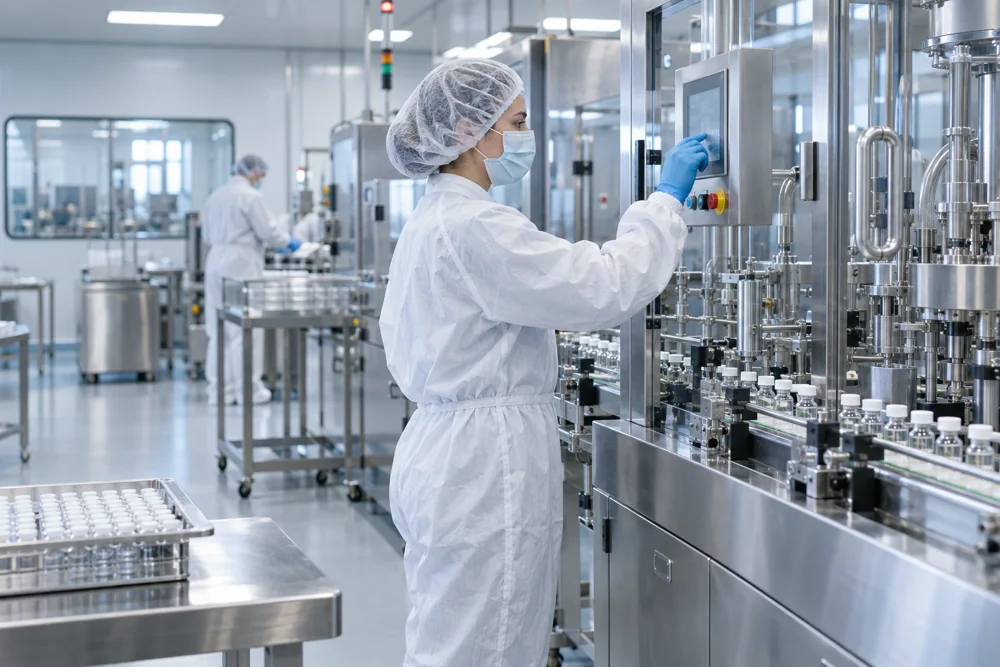
GMP is the assurance of the minimum requirements that enable manufacturers in the food, pharmaceutical, medical device and cosmetic sectors to produce at a high level of quality and under legal conditions.
What Is the GMP Certificate?
Good Manufacturing Practice (GMP) is the assurance of the minimum requirements that enable manufacturers in the food, pharmaceutical, medical device and cosmetic sectors to produce at a high level of quality and under legal conditions.
GMP (Good Manufacturing Practice) standards are included in the legislation of many countries. Countries have established GMP rules suited to themselves within their own legislation.
Who Can Obtain the GMP Certificate?
Basic GMP Rules; Hygiene: The production area must be clean and in hygienic condition Cross-Contamination: Measures to prevent contamination must be taken in production conditions Production Conditions: Production processes must be clearly specified. Documentation: Instructions and procedures must be written in clear and plain language. Labeling: The procedure and instruction for labeling the product Training: Training of employees and training records Records: Keeping records of procedures and instructions, and of deviations Distribution: Distribution procedure and records Traceability of all processes up to the point where the final product is presented to the consumer is recommended under good manufacturing practices. GMP rules are not procedures that impose a cumbersome burden; on the contrary, they cover legal processes that must already be complied with. For detailed information, please contact us…
GMP — frequently asked questions
What Are GMP Good Manufacturing Practices?
GMP (Good Manufacturing Practices) is a standard that includes protective measures concerning an organization's internal and external conditions, aimed at preventing or reducing the likelihood of product contamination from internal and external sources. This practice is one of the basic approaches in the manufacture and distribution of food products, and is a set of techniques that must be applied continuously at the stages of raw materials, processing, product development, production, packaging, storage and distribution in order to ensure product quality.
Why GMP;
- With GMP, you gain full command of your production processes.
- With GMP, you ensure continuity in your production processes.
- With GMP, you are always ready for regulatory inspections.
- With GMP, you achieve customer satisfaction.
- With GMP, you achieve regulatory compliance.
What Is GMP Plus?
The GMP Plus Feed Safety Certificate is a standard created to establish a safe supply chain in the control and sale of animal feed. It was formed in 1992 when Dutch feed industry companies came together. The standard was developed taking into account European Union directives and consumer product safety laws. In our country, it is a certificate that feed manufacturers are required to obtain.
What Are the GMP Rules?
1-Decide on the details of the work to be produced (product types, controls, approvals)
2-Write down everything to be done (Standard Operating Procedures = SOPs, equipment, laboratories, etc.)
3-Do everything that has been written (training, competence, process control)
4-Write down what you do, prove what you have done (records, audits)
5-Corrective action, continual improvement: correct mistakes and improve quality (monitor processes, investigate and draw conclusions)